

You see aluminum composite panel everywhere in modern architecture because it brings outstanding versatility and durability to your projects. Its lightweight structure and corrosion resistance make it a top choice for both commercial and residential buildings. With a market share projected to reach 20.7% by 2025, you gain superior design flexibility and long-lasting visual appeal.
Key Takeaways
● Aluminum composite panels (ACPs) offer durability and weather resistance, making them ideal for both commercial and residential buildings.
● These panels provide design flexibility with a variety of colors and finishes, allowing you to achieve unique architectural styles.
● ACPs are eco-friendly, as they are recyclable and energy-efficient, supporting sustainable building practices.
Aluminum Composite Panel Overview
Aluminum composite panel stands out as a modern building material that transforms architectural projects. You benefit from its unique structure, which combines a polyethylene or fire-rated core with two aluminum sheets. This combination results in a lightweight yet strong panel that supports creative architectural solutions.
Key Features for Architecture
You can rely on aluminum composite panel for its advanced features. Alusun Bond introduces innovations that set new standards in the industry.
| Step | Description |
|---|---|
| 1 | Preparing the raw material by melting polyethylene or fire-rated core through heat extrusion. |
| 2 | Cleansing the aluminum coil through degreasing, chromatization, and carbon coating. |
| 3 | Fabrication and compression of the polyethylene core between aluminum panels using high-pressure compressors. |
| 4 | Adding a protective layer to enhance durability and resistance to scratches and weather. |
| 5 | Customization of ACP sheets for specific design requirements, including surface treatments and color options. |
| 6 | Quality control and inspection to ensure structural integrity and adherence to industry standards. |
Alusun Bond’s panels offer abundant colors, PVDF coating for color stability, and self-cleaning surfaces. You experience easy installation and high strength, which allows for curved and multi-folding shapes.
The nano fluorocarbon coating provides excellent self-cleaning, saving you time and maintenance costs.
Why Choose ACPs for Modern Design
You choose aluminum composite panel for its versatility and performance.
● Provides protection against UV radiation, acid rain, and industrial pollutants.
● Enhances resistance to humidity and physical wear.
● Offers superior long-term protection and aesthetic appeal.
Modern architecture values sustainability. Aluminum composite panel supports eco-friendly building practices because it is recyclable and energy efficient. Its reflective coating helps maintain comfortable indoor temperatures, reducing energy consumption. You achieve a contemporary look while meeting environmental goals.
Top Applications of Aluminum Composite Panels
Aluminum composite panels have transformed the way you approach modern architecture. You can use these composite panels in a wide range of applications, each offering unique benefits for both aesthetics and performance. Explore how you can leverage composite panels for exterior applications, interior applications, signage, ceilings, and architectural features.
Exterior Facades
You see composite panels as the preferred choice for exterior applications. These panels deliver outstanding performance in facade cladding, making your building stand out while protecting it from harsh weather. You benefit from their durability, lightweight construction, and easy installation. Composite panels offer superior resistance to UV rays, wind, and pollution, ensuring your facade maintains its appearance for years.
● You can select from a variety of finishes and colors to match your design vision.
● Composite panels require minimal maintenance, saving you time and costs.
● You achieve energy efficiency and sustainability by choosing panels made from recycled materials.
Alusun Bond’s 4D wood grain panels give your exterior applications a warm, natural look without sacrificing durability. Hyperbolic composite panels introduce innovative shapes and patterns, enhancing the aesthetic appeal and creating a calming atmosphere. These specialized panels remain lightweight and weather-resistant, so your building’s exterior stays attractive with little upkeep.
Tip: Use 4D wood grain composite panels for residential projects to create a welcoming facade that mimics natural wood, while benefiting from the low maintenance and longevity of aluminum composite panels.
Interior Cladding
You can elevate your interior applications with composite panels that combine style and performance. These panels suit commercial spaces, offices, and homes, offering a sleek, modern finish. You enjoy easy installation and a wide selection of colors and textures.
| Advantage | Description |
|---|---|
| Durability | Composite panels maintain their shape and color for years, making them ideal for various buildings. |
| Fire Resistance | Many panels pass rigorous safety tests, slowing down flames and enhancing safety in critical buildings. |
| Low Maintenance | Requires minimal cleaning and no repainting, leading to significant cost savings over time. |
| Lightweight | Weighing about 2.5 pounds per square foot, they are easy to handle and install. |
| Design Flexibility | Available in numerous finishes and colors, allowing for customization to suit different aesthetics. |
| Cost Efficiency | Cost per square meter ranges from $2 to $10, making them a budget-friendly option compared to other materials. |
Perforated composite panels enhance acoustic performance in interior applications. You can use these panels in studios, cinemas, or offices to reduce noise and improve sound quality. The precise perforation designs create cavity resonance structures, absorbing sound and ensuring a quieter environment.
Signage and Branding
Composite panels play a vital role in signage and branding for retail and corporate environments. You can use these panels for shopfronts, wayfinding signs, and branded displays. Their lightweight and strong construction makes them easy to handle and install, while their versatility supports digital printing for high-resolution images and custom branding.
● Composite panels are cost-effective and require minimal maintenance.
● You can use them for both indoor and outdoor applications, ensuring consistent branding across all spaces.
Specialized finishes, such as gloss and metallic, improve visibility and durability for outdoor signage. Advanced coatings like PVDF protect your signs from weather elements, keeping them vibrant and intact over time.
| Finish Type | Best Use | Features |
|---|---|---|
| Gloss | Outdoor signs | Bright, easy to clean |
| Metallic | Modern designs | Shiny, stands out in sunlight |
Ceilings and Soffits
You can simplify ceiling installations with composite panels due to their lightweight properties. These panels decrease installation complexity, lower labor needs, and speed up project timelines. You minimize the risk of errors and reduce the potential for costly rework compared to heavier materials.
Perforated composite panels also improve acoustic performance in ceiling applications. You create quieter and more comfortable spaces by absorbing unwanted noise, which is especially valuable in offices, schools, and public buildings.
Note: Choose perforated composite panels for ceilings in conference rooms or auditoriums to enhance sound quality and reduce noise distractions.
Architectural Features
You unlock limitless possibilities for architectural features with composite panels. You can fabricate these panels into 3D, trapezoid, triangle, polygonal, curved, and hyperbolic shapes. This flexibility allows you to create unique facade decoration styles and striking interior elements.
● You enhance both aesthetic appeal and practical performance, such as noise reduction and insulation.
● You collaborate closely with designers to meet specific needs and preferences.
● High-quality materials and innovative techniques ensure your architectural features are both functional and visually impressive.
Digital tools and precision manufacturing enable you to integrate composite panels into complex building geometries. You use advanced software for conceptual design and precise installation techniques to achieve crisp edge treatments and visual continuity.
| Design Trend/Technique | Description |
|---|---|
| Environmental Concerns | Materials must meet energy performance and maintenance requirements. |
| Urban Site Adaptation | Composite panels are used in crowded urban environments to maximize space efficiency. |
| Digital Tools | Advanced software enables the creation of complex forms that were previously unfeasible. |
| Precision Manufacturing | Improved manufacturing techniques ensure flatness and crisp edge treatments. |
| Installation Techniques | Concealed fastening systems and panel alignment methods enhance visual continuity. |
Callout: Hyperbolic and custom-shaped composite panels allow you to express your creativity and achieve architectural features that set your project apart.
You can rely on aluminum composite panel and aluminum composite panels for a wide range of applications. These composite panels deliver superior performance, design flexibility, and aesthetic value, making them essential for modern architecture.
Advantages and Considerations
Durability and Weather Resistance
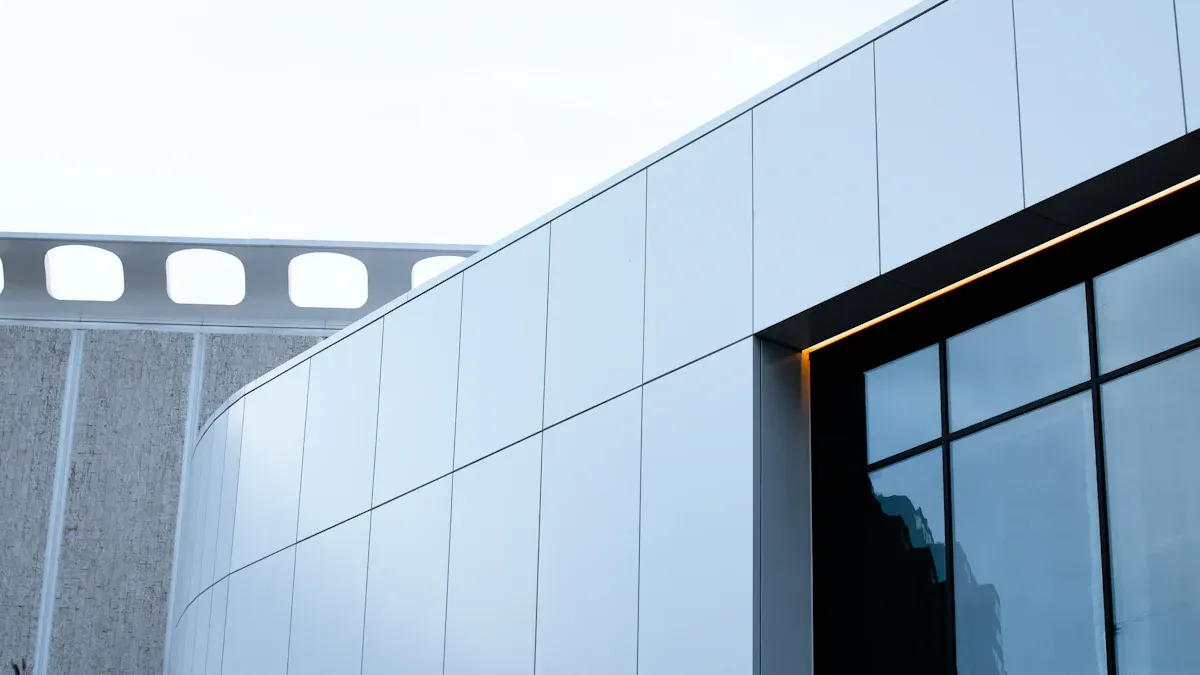
You gain confidence in aluminum composite panels because they deliver outstanding durability in harsh climates. Fluorocarbon coatings resist high temperatures, wear, and pollution. The flexible plastic core prevents warping and distortion, while the panels remain non-corrosive even in humid conditions. You see these panels excel in wind-load resistance, making them ideal for high-rise buildings. Fire-retardant cores increase safety and protect your investment. Sunlight and tropical climates do not damage the strength or quality, and the polyethylene core acts as a thermal barrier for energy-efficient building designs.
Aesthetic Flexibility
You achieve your design goals with a wide variety of colors and finishes. Warm colors create dynamic environments, while cool tones evoke tranquility. Neutral shades provide harmony and act as sophisticated backdrops. Accent colors highlight key architectural features, adding visual interest. The finishes and textures transform simple elements into complex aesthetic statements. You use these panels to establish strong visual identities or embrace subtle sophistication.
| Metric | Requirement | Performance After Aging |
|---|---|---|
| Gloss Retention Rate | ≥ 85% after 5 years | 85%-90% after 5000 hours of QUV, equivalent to 5-10 years of natural exposure |
| Color Difference (ΔE) | ΔE ≤ 5 after 5 years | ΔE controlled within 3-5 after 4000-5000 hours of QUV, indicating slight color change |
Installation and Maintenance
You simplify installation with lightweight panels that are easy to handle. Cut panels with the protective film on to avoid scratches. Use corrosion-resistant rivets and cassette systems for a premium look. Apply weather-resistant silicone on joints and maintain expansion gaps. Inspect alignment and joint uniformity before removing the protective film. You benefit from minimal upkeep, needing only a wash every few months. Compared to traditional siding, aluminum composite panels require the least maintenance and offer the longest lifespan.
Sustainability
You support sustainability by choosing aluminum composite panels as an eco-friendly alternative. These panels contribute to sustainable construction practices through recycled content and energy efficiency. Lifecycle analysis helps you understand their environmental impact from extraction to disposal. You find certifications like EPD and LEED that recognize their low environmental footprint and role in green building. The use of recycled aluminum lowers energy consumption and carbon emissions, promoting a circular economy.
Tip: Select aluminum composite panels for projects that demand durability, aesthetic excellence, easy installation, and sustainability.
You unlock creative potential with aluminum composite panels in facades, interiors, signage, and architectural features. ACPs deliver cost savings, quick installation, and lasting durability. Future trends include fire-resistant materials and smart panel systems. For tailored solutions, consult guides and organizations like AAMA to match ACPs to your project needs.
FAQ
What makes aluminum composite panel different from other building materials?
You choose aluminum composite panel because it combines lightweight construction with high durability. These materials resist weather, corrosion, and fading, making them ideal for modern architecture.
Can you use aluminum composite panel with other materials in your project?
You can combine aluminum composite panel with glass, stone, or wood. These materials work together to create unique designs and improve both aesthetics and performance in your building.
Post time: Jan-07-2026